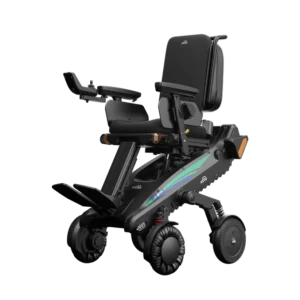
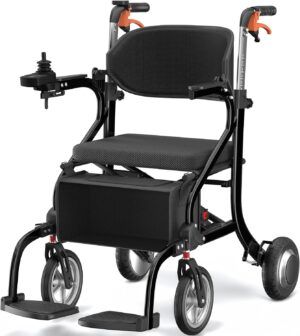
Find a wheelchair that fits your body, your home and your daily routine. First, browse lightweight manual wheelchairs that fold into a car trunk. Next, look at transport chairs for easy companion-pushed trips, power wheelchairs for longer distances, and heavy duty models built for higher weight capacities. In addition, use the filters for seat width, weight capacity, chair weight, folded size and battery range. Alternatively, call [phone] for advice before you buy.
Category menu / filter labels
Standard Manual Wheelchairs
Lightweight & Ultralight Wheelchairs
Transport Chairs
Power Wheelchairs
Folding & Travel Power Chairs
Heavy Duty & Bariatric Wheelchairs
Pediatric Wheelchairs
Sports & Active Wheelchairs
Cushions, Batteries & Accessories
Quick Comparison Table
Standard Manual
Lightweight / Ultralight
Transport Chair
Power Wheelchair
Best for
Occasional use, short trips
Daily self-propelling, active users
Companion-pushed outings, appointments
Longer distances, limited upper-body strength
Typical chair weight
About 35 to 40 lb (16 to 18 kg)
About 15 to 34 lb (7 to 15 kg)
About 15 to 25 lb (7 to 11 kg)
About 50 to 250+ lb (23 to 113+ kg)
Typical weight capacity
250 to 300 lb (113 to 136 kg)
250 to 300 lb (113 to 136 kg)
250 to 300 lb (113 to 136 kg)
250 to 450 lb (113 to 204 kg)
Common seat widths
16 to 20 in (41 to 51 cm)
14 to 20 in (36 to 51 cm)
16 to 20 in (41 to 51 cm)
16 to 22 in (41 to 56 cm)
Who propels it
The rider or a companion
The rider
A companion
The rider, by joystick
Folds for a car trunk
Yes
Usually yes
Yes
Only on travel models
Typical range per charge
Not applicable
Not applicable
Not applicable
About 10 to 20 miles (16 to 32 km)
Figures are typical manufacturer ranges. However, individual models vary, so always check the spec sheet of the exact chair you are considering.
How to Choose a Wheelchair: Every Dimension That Matters
Choosing well comes down to a handful of decisions. To keep them easy to scan, we have grouped them into five areas: fit, support, mobility, portability and everyday use.
Fit: Getting the Measurements Right
1. Seat width. The seat should let you sit comfortably without pressing against the side guards. As a rule, standard adult seats come in 16, 18 and 20 in widths (41, 46 and 51 cm). A seat that is too wide, however, makes self-propelling harder, whereas one that is too narrow causes pressure and discomfort. Therefore, measure across your hips while seated, then add about one inch on each side.
2. Seat depth. Seat depth is measured from the back of the seat to the front edge. Ideally, there should be a gap of a couple of inches between the seat edge and the back of your knees. Too deep a seat, for example, can restrict circulation and force you to slouch.
3. Seat-to-floor height and footrests. Seat height affects transfers and how well you reach a table. Moreover, footrests should support your feet with your knees at a comfortable angle. If you self-propel with your feet, a lower seat is often better.
Support: Capacity and Comfort
4. Weight capacity. Choose a chair rated above your body weight plus anything you carry. Standard models are usually rated 250 to 300 lb (113 to 136 kg). Heavy duty and bariatric chairs, in contrast, are rated 350 to 500 lb (159 to 227 kg) or more. Because of the extra load, they use stronger frames, wider seats and reinforced wheels.
5. Cushions and backrests. A good cushion protects your skin and improves posture. In addition, foam, gel and air cushions each balance comfort, weight and pressure relief differently. If you sit for many hours a day, ask a clinician about pressure-relief options, since skin breakdown can become a serious problem.
6. Armrests and side guards. Flip-back or removable armrests make side transfers easier. Similarly, desk-length arms let you pull up close to tables. Meanwhile, full-length arms give more support when standing up.
Mobility: Self-Propelled, Pushed or Powered
7. Frame weight and wheel size. Lighter frames are easier to push and lift. For example, a chair under 25 lb is far easier to load into a car than a 40 lb standard model. Rear wheels are typically 24 in; larger wheels roll more easily, while smaller ones suit tight spaces.
8. Power range and speed. Power wheelchairs typically reach about 3 to 6 mph (5 to 10 km/h) and travel roughly 10 to 20 miles (16 to 32 km) per charge. Still, treat every range figure as a best case. In practice, hills, heavier riders and older batteries all reduce the distance.
9. Drive type for power chairs. Rear-wheel, mid-wheel and front-wheel drive each handle differently. Mid-wheel drive, for instance, usually turns in the tightest space, which helps indoors. Rear-wheel drive, on the other hand, often feels more stable at higher speeds outdoors.
Portability: Weight and Folded Size
10. Folding and weight. Many manual wheelchairs fold sideways or have quick-release wheels, so they fit in a car trunk. Transport chairs are usually the lightest to lift. By contrast, most power wheelchairs are too heavy to lift, so they need a ramp, lift or a vehicle adapted for them.
11. Folded size and disassembly. Before you buy, compare the folded dimensions with your trunk opening. In addition, check whether the chair breaks down into smaller parts, since a heaviest piece of around 30 lb is much easier to manage than one single heavy unit.
Everyday Use: Home, Doorways and Controls
12. Doorways and turning space. Standard doorways are often about 32 in (81 cm) wide when open. Therefore, measure your narrowest doorway, hallway and bathroom, and compare them with the overall width of the chair. Remember that overall width is wider than seat width because of the wheels and armrests.
13. Controls and comfort. For power chairs, joysticks suit most riders, but alternative controls exist for limited hand function. Finally, a therapist or mobility specialist can help match controls, seating and positioning to your needs.
Manual vs Power Wheelchairs
Manual wheelchairs are lighter, simpler and usually cheaper. That is why they suit occasional use, travel and people with good upper-body strength. On the other hand, power wheelchairs cost more but reduce physical effort, cover longer distances and handle slopes more easily. Therefore, if you tire quickly or have limited arm strength, consider power. If you mainly need a chair for short trips and appointments, a lightweight manual or transport chair is often enough.
Wheelchair or Mobility Scooter?
A wheelchair suits people who need more postural support, who cannot sit upright for long without it, or who need to be pushed by a companion. In contrast, a scooter suits people who can sit upright, steer with a tiller and transfer on and off a seat independently. In either case, a healthcare professional can help you decide.
Wheelchair Batteries: Lithium vs Lead-Acid
Sealed lead-acid (SLA)
Lithium
Weight
Heavier
Much lighter
Typical life
About 1 to 3 years
About 2 to 5 years
Charge time
Often 8 to 10 hours
Often shorter
Purchase cost
Lower
Higher
Air travel
Different rules from lithium
Limited by watt-hours
Above all, avoid running an SLA battery fully flat, since deep discharge shortens its life.
Flying With a Wheelchair
Airlines generally carry wheelchairs, but battery rules apply to power chairs. In the US, lithium-ion batteries are typically limited to 300 watt-hours (Wh) each. To work out watt-hours, multiply volts by amp-hours (for example, 24 V x 10 Ah = 240 Wh). Because airlines add their own rules, contact yours well ahead of time. Also have the chair’s folded size, weight and battery label ready, since some airlines require the battery to be removed or disconnected.
Buying Checklist
Measure your seat width, seat depth and the doorways you use every day.
Decide who will propel the chair: you, a companion or a motor.
Pick the type: standard, lightweight, transport, power or heavy duty.
Verify weight capacity, folded size and chair weight.
Choose a cushion and backrest that suit how long you sit each day.
Test the chair for seat comfort, reach and turning confidence.
Plan storage, charging and transport.
Compare the total cost: chair, cushion, accessories, spare battery and servicing.
Check warranty and after-sales support.
Care and Maintenance
To keep your chair safe, check tire pressure and brakes regularly. In addition, wipe down the frame and upholstery, and tighten loose bolts. For power chairs, charge after each use and avoid letting the battery drain fully. Finally, have the chair serviced yearly, and follow the maximum weight limits.
FAQ
What is the best wheelchair for everyday use? A lightweight manual wheelchair with the right seat width and a good cushion suits most everyday users. For longer distances, however, a power wheelchair may be a better fit.
How much does a wheelchair weigh? Standard manual wheelchairs weigh about 35 to 40 lb (16 to 18 kg). Lightweight and ultralight models, meanwhile, can weigh well under 30 lb (14 kg), and transport chairs are often lighter still.
How far can a power wheelchair go on one charge? Typical rated ranges are about 10 to 20 miles (16 to 32 km). However, real distances are lower with hills and heavier loads.
What weight can a wheelchair carry? Standard wheelchairs are usually rated 250 to 300 lb (113 to 136 kg). By comparison, heavy duty and bariatric models are rated 350 to 500 lb (159 to 227 kg) or more.
What seat width do I need? Measure across your hips while seated and add about one inch on each side. Most adults fit a 16 to 20 in seat, although this varies from person to person.
Can I take a wheelchair on a plane? Usually yes, with advance notice. In the US, lithium-ion batteries are typically limited to 300 Wh. Because airlines set extra rules, contact your airline early.
Will insurance cover a wheelchair? Coverage depends on your plan, your country and your medical needs. Therefore, check with your insurer or healthcare provider before you buy