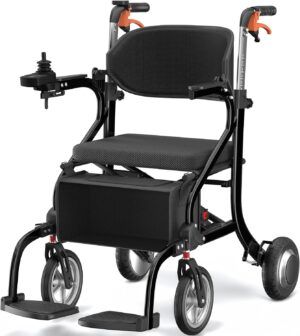
Find walkers that fit your height, your home and your daily routine. First, browse standard folding walkers for steady support indoors. Next, look at 2 wheel walkers for a smoother stride, 4 wheel rollators with a built-in seat for longer outings, and heavy duty models built for higher weight capacities. In addition, use the filters for handle height, weight capacity, wheel size, seat width and folded size. Alternatively, call [phone] for advice before you buy.
Category menu / filter labels
Standard Walkers (No Wheels)
2 Wheel Walkers
3 Wheel Walkers
4 Wheel Walkers & Rollators
Folding & Travel Walkers
Heavy Duty & Bariatric Walkers (350 to 500+ lb)
Walkers With Seats
Knee Walkers
Accessories (Baskets, Trays, Glides & Grips)
Quick Comparison Table
Standard Walker
2 Wheel Walker
3 Wheel Rollator
4 Wheel Rollator
Best for
Maximum stability, recovery
Steady walking with a smoother stride
Tight spaces and indoor turns
Longer outings, resting on the go
Typical weight
About 5 to 8 lb (2.3 to 3.6 kg)
About 6 to 9 lb (2.7 to 4 kg)
About 8 to 15 lb (3.6 to 6.8 kg)
About 10 to 20 lb (4.5 to 9 kg)
Typical weight capacity
300 to 350 lb (136 to 159 kg)
300 to 350 lb (136 to 159 kg)
250 to 300 lb (113 to 136 kg)
250 to 350 lb (113 to 159 kg)
Wheels
None (rubber tips or glides)
2 front wheels
3 wheels, usually 7 to 8 in
4 wheels, usually 6 to 8 in
Built-in seat
No
No
Rarely
Often
Brakes
None; lift to move
Friction on the rear legs
Hand brakes
Hand brakes with parking lock
Folds for storage
Yes
Yes
Yes
Yes
Figures are typical manufacturer ranges. However, individual models vary, so always check the spec sheet of the exact walker you are considering.
How to Choose Walkers: Every Dimension That Matters
Choosing well comes down to a handful of decisions. To keep them easy to scan, we have grouped them into five areas: fit, support, mobility, portability and everyday use.
Fit: Getting the Measurements Right
1. Handle height. This is the most important measurement. Stand upright with your arms relaxed at your sides, and the handles should line up with the crease of your wrist. As a result, your elbows bend slightly, about 15 to 30 degrees, when you hold the grips. Most adult walkers adjust from roughly 32 to 39 in (81 to 99 cm), but taller and shorter riders may need a specific model.
2. Overall width. Standard walkers are about 22 to 26 in (56 to 66 cm) wide, whereas narrow models can be slimmer. Therefore, measure your narrowest doorway, hallway and bathroom, then compare them with the walker’s width.
3. Frame depth and walking space. Your body should sit comfortably inside the frame, not behind it. For example, a walker that is too far ahead makes you lean forward, while one that is too close can catch your heels.
Support: Capacity and Comfort
4. Weight capacity. Choose a walker rated above your body weight plus anything you carry. Standard models are usually rated 250 to 350 lb (113 to 159 kg). Heavy duty and bariatric walkers, in contrast, are rated 400 to 500 lb (181 to 227 kg) or more. Because of the extra load, they use stronger frames, wider bases and reinforced legs.
5. Grips and hand comfort. Soft, contoured grips reduce pressure on your palms. In addition, if you have arthritis, look for wider or cushioned handles and light brakes. Similarly, a smaller grip diameter suits smaller hands.
6. Seat and backrest. A seat lets you rest during longer walks. Common seat widths run from about 12 to 18 in (30 to 46 cm), and seat heights from about 18 to 21 in (46 to 53 cm). Meanwhile, a padded backrest adds comfort, although it makes the walker slightly heavier.
Mobility: Wheels, Brakes and Terrain
7. Wheel number. Walkers without wheels are the most stable, but you must lift them with every step. 2 wheel walkers, however, glide forward so your walking feels smoother. 3 and 4 wheel rollators move freely and suit people who can balance well and steer comfortably.
8. Wheel size. Wheels typically run from 5 to 10 in (13 to 25 cm). Smaller wheels suit smooth indoor floors, whereas larger 8 in wheels roll more easily over kerbs, gravel and uneven ground. Therefore, if you mainly walk outdoors, choose larger wheels.
9. Brakes. Rollators use hand brakes, and many have a locking feature that holds the walker still when you sit. Moreover, check that you can squeeze the brake levers comfortably, since weak grip strength makes braking harder.
Portability: Weight and Folded Size
10. Weight and portability. Standard walkers are the lightest, at about 5 to 8 lb (2.3 to 3.6 kg). By contrast, rollators with seats can weigh 10 to 20 lb (4.5 to 9 kg). As a result, the heavier models take more effort to lift into a car.
11. Folded size. Most walkers fold flat for storage. In addition, check the folded dimensions against your trunk opening and storage space. Finally, note whether the walker folds with one hand, since this makes loading much easier.
Everyday Use: Home, Outdoors and Accessories
12. Everyday use. Think about where you will use the walker most. For example, a compact 3 wheel rollator turns easily in a kitchen, while a 4 wheel model with a seat and basket suits shopping trips. Likewise, trays and baskets help you carry items safely at home.
13. Safety features. Look for non-slip tips, reflectors, a sturdy locking mechanism and, ideally, a stable frame that does not wobble when loaded. Also, replace worn rubber tips or glides promptly, since they affect grip on the floor.
Walker or Rollator?
A standard walker gives the most stability, because you lift it and place it with each step. That is why it suits recovery after surgery or anyone who needs maximum support. On the other hand, a rollator rolls freely, so it suits people who can balance well and want a smoother, faster walk. Therefore, if balance is your main concern, start with a standard or 2 wheel walker. If endurance is the issue, a rollator with a seat is often a better fit.
Walker, Cane or Wheelchair?
A cane suits people who need a little balance support. In contrast, a walker gives a wider base and takes more weight off your legs. A wheelchair, meanwhile, suits people who cannot walk safely, even with support. In any case, a physical therapist or healthcare professional can help you choose the right level of support.
Travelling With a Walker
Most airlines allow walkers as assistive devices, and many let you take them to the gate. Folding models store easily in a car trunk. Because policies vary, contact your airline ahead of time, and check the folded size and weight before you travel. In addition, pack a few spare rubber tips or glides for longer trips.
Buying Checklist
Measure your wrist-crease height to find the right handle height.
Measure your narrowest doorway and hallway.
Pick the type: standard, 2 wheel, 3 wheel, 4 wheel or heavy duty.
Verify weight capacity, wheel size and brake type.
Check grip comfort and, if needed, a built-in seat.
Test the walker for stability, folding and steering.
Plan storage and transport.
Compare the total cost: walker, accessories and spare parts.
Check warranty and after-sales support.
Care and Maintenance
To keep your walker safe, check the tips, glides and wheels regularly. In addition, make sure the height-adjustment buttons click fully into place. Wipe down the frame, tighten loose bolts, and test the brakes before each use. Finally, replace any worn or damaged parts promptly, and follow the maximum weight limit.
FAQ
What is the best walker for everyday use? A lightweight folding walker with the right handle height suits most indoor use. For longer outings, however, a 4 wheel rollator with a seat and basket is often more practical.
How do I know if my walker is the right height? Stand upright with your arms relaxed, and the handles should line up with the crease of your wrist. Your elbows should then bend slightly when you hold the grips.
How much does a walker weigh? Standard walkers weigh about 5 to 8 lb (2.3 to 3.6 kg). Rollators, meanwhile, typically weigh 10 to 20 lb (4.5 to 9 kg).
What weight can a walker carry? Standard walkers are usually rated 250 to 350 lb (113 to 159 kg). By comparison, heavy duty and bariatric models are rated 400 to 500 lb (181 to 227 kg) or more.
What is the difference between a walker and a rollator? A walker usually has no wheels, or only 2 front wheels, and you lift it with each step. A rollator has 3 or 4 wheels and hand brakes, so it rolls continuously.
Can I take a walker on a plane? Usually yes. Most airlines treat walkers as assistive devices. Because policies differ, contact your airline early.
Will insurance cover a walker? Coverage depends on your plan, your country and your medical needs. Therefore, check with your insurer or healthcare provider before you buy.